Dating in the modern world has become increasingly complex. With dating apps offering seemingly endless options and social media showcasing idealized relationships, many singles find themselves overwhelmed and confused about what they should truly value in a potential partner. At the heart of this confusion lies a critical distinction: the difference between preferences and standards in dating.
In this article, we’ll explore how dating has evolved throughout history and clarify the important distinction between preferences (flexible “wants”) and standards (non-negotiable “needs”). Understanding this difference isn’t just academic it could be the key to finding a fulfilling, lasting relationship rather than remaining perpetually disappointed in your search for an idealized partner who may not exist.
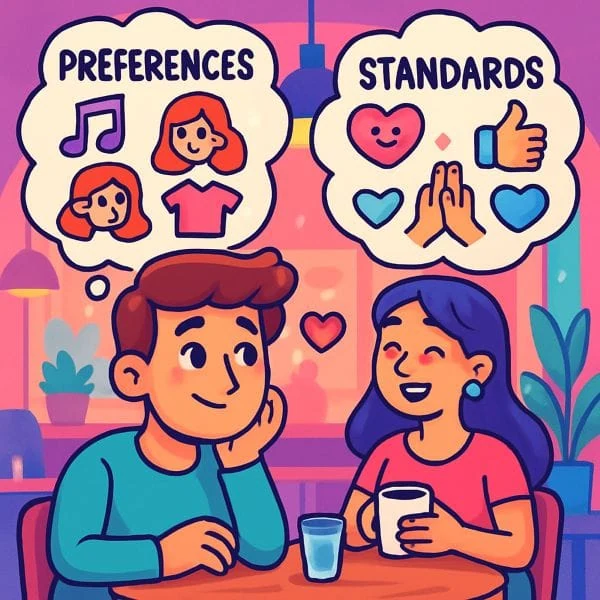
Overview: Preferences vs. Standards in Dating
Before diving deeper, let’s establish clear definitions of these two crucial concepts:
Preferences
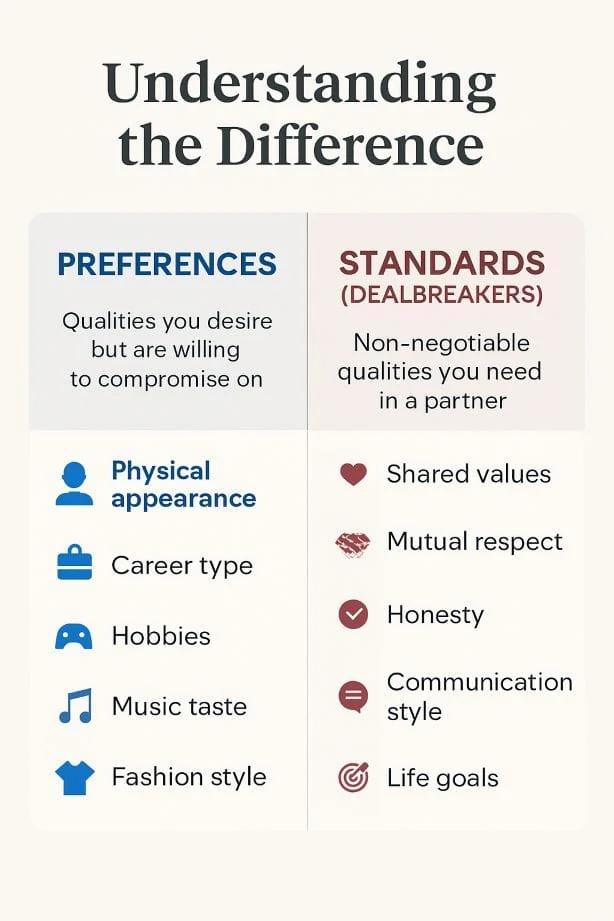
Preferences are the qualities you’d like your partner to have but could compromise on if necessary. These are your “nice-to-haves” traits that might enhance your attraction or compatibility but aren’t essential for relationship success.
Examples include height, hair color, musical taste, fashion sense, or specific hobbies.
Standards
Standards are the qualities you need in a partner your non-negotiables. These reflect your core values and boundaries, representing the minimum requirements for a healthy, fulfilling relationship.
Examples include honesty, respect, emotional availability, aligned life goals, and compatible communication styles.
Why does this distinction matter? Because confusing preferences for standards (or vice versa) can lead to either settling for unhealthy relationships or rejecting potentially wonderful partners over superficial traits. Learning to differentiate between the two is essential for making wiser choices in your romantic life.
A Brief History of Dating
To understand how we arrived at today’s dating landscape, let’s look at how romantic relationships have evolved over time:
- 19th Century Courtship: Dating wasn’t casual it was courtship with marriage as the goal. Family involvement was significant, with parents often having the final say. Standards cantered around social status, family reputation, and ability to provide or manage a household.
- Early 20th Century: Dating moved into public spaces like restaurants and dance halls. This shift gave young people more autonomy but also introduced new social pressures. The man was expected to initiate and pay, while women were judged on appearance and “respectability.”
- Post-WWII “Going Steady”: The 1950s saw the rise of exclusive dating or “going steady.” This era emphasized conformity to gender roles, with men as providers and women as homemakers. The focus was on finding a suitable marriage partner relatively early in life.
- Sexual Revolution (1960s-70s): Dating became less formal and more experimental. The introduction of birth control pills gave women more reproductive freedom, challenging traditional expectations. Relationships became more diverse in form and purpose.
- Modern Digital Era: Online dating and apps have transformed how people meet, offering unprecedented choice but also creating new challenges. Today’s dating landscape features more options but also more confusion about what to prioritize in potential partners.
What Are Preferences?
Preferences in dating are the qualities you’re naturally drawn to but could ultimately compromise on without affecting your happiness or the health of your relationship. Think of preferences as your dating “wish list” rather than your requirements.
Common Dating Preferences
Physical Attributes
- Height
- Body type
- Hair color
- Style/fashion sense
- Fitness level
Lifestyle Choices
- Hobbies and interests
- Travel preferences
- Food preferences
- Social activity level
- Living environment
Background Factors
- Education level
- Career type
- Cultural background
- Family dynamics
- Financial status
The key characteristic of preferences is flexibility. For example, you might prefer someone who shares your love of hiking, but if you meet someone who doesn’t hike yet connects with you on deeper levels, that preference becomes less important.
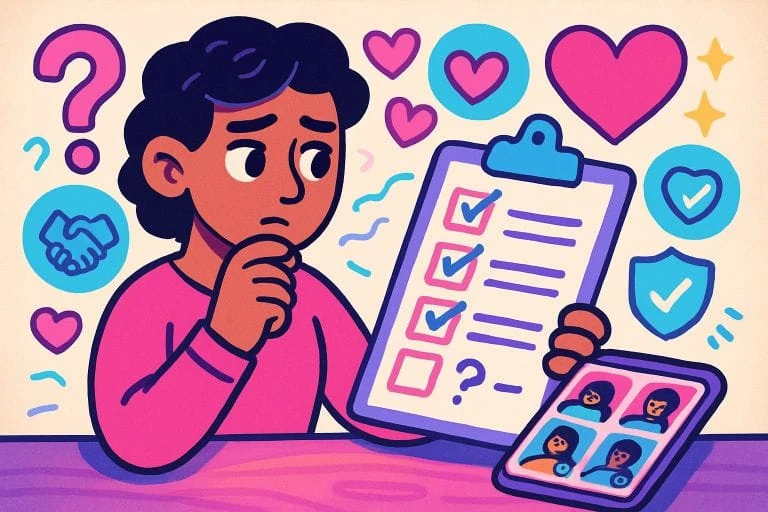
“I always thought I needed to date someone who shared my passion for travel. Then I met my partner who hadn’t traveled much but was open to new experiences. Five years later, we’ve explored more places together than I ever did with my ‘well-traveled’ exes.”
Jamie, 34
What Are Standards?
Standards are your non-negotiable requirements in a relationship the essential qualities without which a healthy partnership isn’t possible. These typically reflect your core values, boundaries, and needs for emotional well-being.
Essential Relationship Standards
Character Traits
- Honesty and trustworthiness
- Respect for boundaries
- Emotional maturity
- Reliability and consistency
- Kindness and empathy
Relationship Dynamics
- Healthy communication
- Emotional availability
- Conflict resolution skills
- Mutual support
- Balanced give and take
Life Compatibility
- Aligned values and ethics
- Compatible life goals
- Agreement on children
- Financial responsibility
- Family dynamics
Unlike preferences, standards shouldn’t be compromised. For instance, if respect is a standard for you, accepting disrespectful behaviour from a partner regardless of their other qualities will likely lead to an unhealthy relationship.

Identify Your Dating Standards
Take our free self-assessment to clarify your non-negotiable standards and flexible preferences. Understanding what truly matters to you is the first step toward healthier relationship choices.
What UK Daters Consider Non-Negotiable
When it comes to relationship standards, certain qualities consistently top the list of dealbreakers for UK daters:
- Poor Communication (68%): The ability to communicate effectively remains the most important standard for UK daters. This includes both listening skills and the capacity to express thoughts and feelings clearly.
- Lack of Trust (65%): Trust forms the foundation of any healthy relationship, making it a critical standard for most people. Without it, even the strongest attraction can’t sustain a relationship.
- Different Values (59%): Shared core values – whether related to family, politics, religion, or lifestyle – provide the framework for long-term compatibility.
- Disrespectful Behaviour (57%): How someone treats you and others serves as a window into their character, making respect a non-negotiable standard for many.
- Incompatible Life Goals (52%): Alignment on major life decisions – such as whether to have children, where to live, or career ambitions – is essential for a relationship to thrive long-term.
Why People Confuse the Two
Despite the clear conceptual difference between preferences and standards, many people struggle to distinguish them in practice. Here’s why this confusion occurs:
Social and Cultural Influences
Society bombards us with messages about what makes someone “dateable.” Media, family expectations, and peer influence can elevate preferences to seem like standards. For example, a woman might believe a man must be taller than her because that’s what society has consistently portrayed as “normal,” even if height doesn’t impact relationship quality.
Dating App Culture
This is where how polished charm can mask emotional distance becomes easy to miss.
Dating apps encourage quick judgments based on surface-level traits. When you can filter potential matches by height, income, or education, these preferences can artificially transform into standards. The abundance of options creates the illusion that you can find someone who meets all your preferences and standards.
Fear of Settling
Many people worry that compromising on any desired quality means “settling.” This fear can lead to treating all preferences as standards, creating an impossibly high bar for potential partners.
“I spent years swiping left on great guys because they didn’t match my ‘type.’ I was so focused on finding someone who fit my mental image that I missed connections with people who had the character and values I truly needed.”
Alex, 29
Protective Mechanisms
Sometimes, focusing on preferences is a way to avoid vulnerability. It’s easier to reject someone for not meeting superficial criteria than to risk emotional investment with someone who meets your deeper standards but might still hurt you.
Not Settling vs. Being Unrealistic
Finding the right balance between maintaining healthy standards and having realistic expectations is crucial for dating success. Here’s how to navigate this delicate balance:
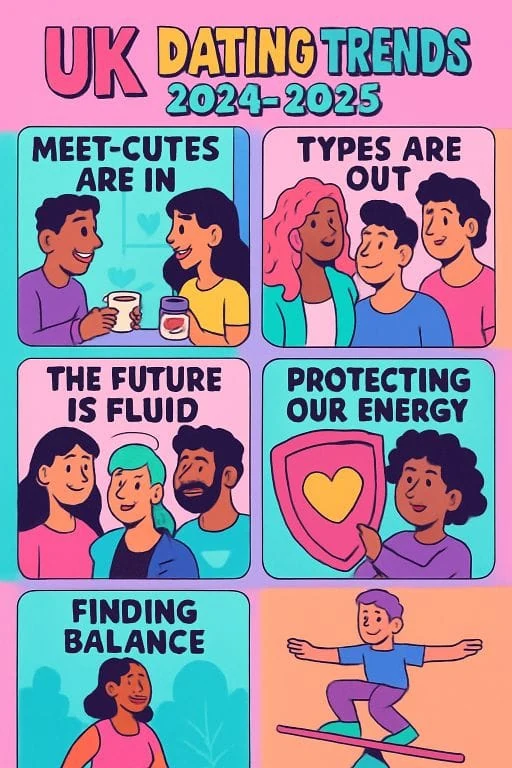
Healthy Standards
- Protect you from toxic relationships
- Reflect your authentic needs and values
- Create foundation for mutual respect
- Lead to greater relationship satisfaction
- Prevent pattern of disappointing relationships
Unrealistic Expectations
It is also relevant to why a long dating checklist does not guarantee more matches or more satisfying conversations.
- Create impossible-to-meet criteria
- Confuse superficial traits with character
- Lead to chronic disappointment
- Miss potentially great partners
- Often based on idealized, not realistic relationships
The Difference Between Compromise and Settling
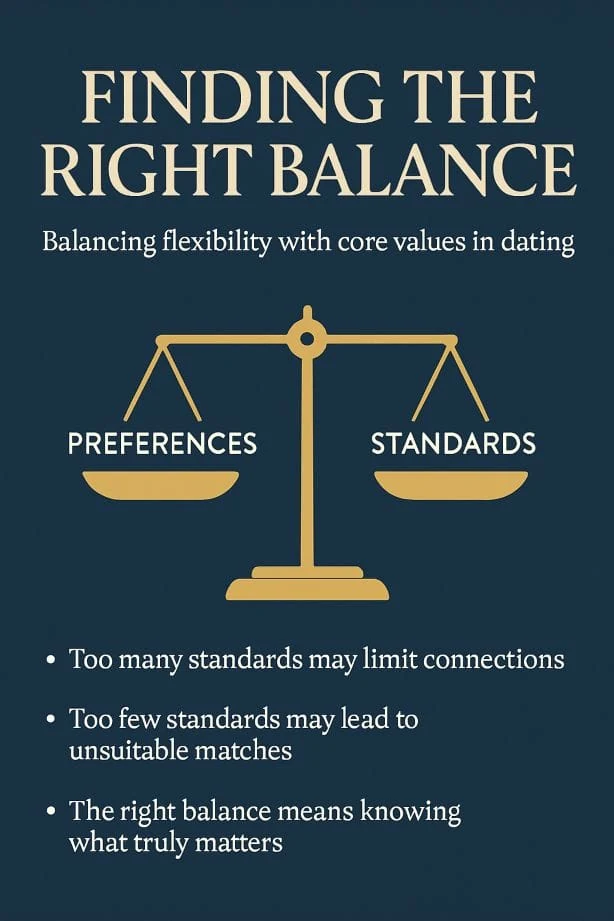
Healthy compromise involves flexibility on preferences while maintaining standards. For example, you might compromise on dating someone who doesn’t share your taste in music but never on someone who doesn’t respect your boundaries.
Settling means accepting a relationship that violates your standards. If emotional support is a standard for you, accepting a partner who dismisses your feelings is settling, regardless of how many preference boxes they check.
“The moment I stopped focusing on finding someone who matched my superficial checklist and started prioritizing character, communication, and compatibility, my dating life transformed. My partner doesn’t match what I thought was ‘my type,’ but our relationship is healthier than any I’ve had before.”
Taylor, 31
Navigating Modern Dating: Practical Tips
Now that you understand the crucial difference between preferences and standards, here are practical strategies to apply this knowledge to your dating life:
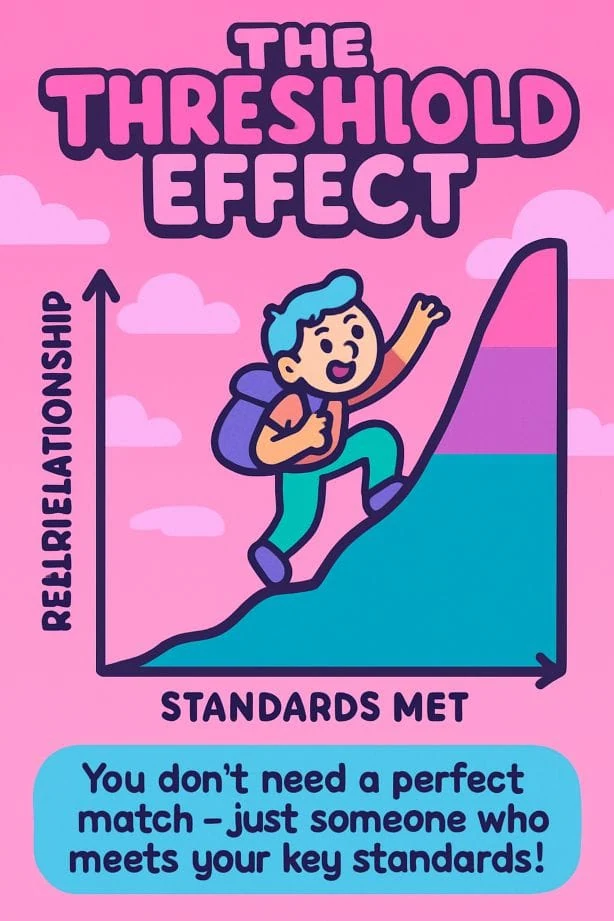
1. Self-Reflection: Know What You Need
Take time to identify your true standards by reflecting on past relationships. What issues consistently caused problems? What values are non-negotiable for your happiness? Create separate lists for your standards (needs) and preferences (wants).
Reflection Exercise: Think about your past relationships. What were the deal-breakers that ended them? What qualities did you admire most in partners? These insights can help clarify your authentic standards.
2. Open Communication: Express Your Standards
Be clear about your standards early in the dating process. This doesn’t mean presenting a demanding list on the first date, but gradually sharing what matters to you. Pay attention to whether a potential partner respects and shares your core values.
3. Adaptability: Let Preferences Evolve
Remain open to connections with people who may not match your typical “type.” Challenge yourself to look beyond initial preferences and evaluate potential partners based on how they align with your standards instead.

4. Use Dating Apps Wisely
Even after a match, how uneven online conversations can affect a match is worth keeping in mind.
When creating dating profiles, highlight your values and what matters to you beyond surface-level traits. When evaluating matches, look for indications of character and compatibility with your standards, not just your preference checklist.
5. Practice Value-Based Dating
Focus first dates on conversations that reveal character and values rather than just shared interests or attraction. Ask questions that help you understand if someone aligns with your standards, such as how they handle conflict or what they value in relationships.
How do I know if I’m being too picky or just maintaining healthy standards?
If you’re consistently rejecting potential partners based on traits that don’t impact relationship health (height, income, specific hobbies), you might be too picky. If you’re prioritizing character, values alignment, and healthy relationship dynamics, you’re maintaining appropriate standards.
Conclusion: Finding Balance in Your Dating Journey
Understanding the difference between preferences and standards in dating isn’t just semantic it’s transformative. By clarifying what you truly need versus what you simply want, you can make more intentional choices that lead to healthier, more fulfilling relationships.
Remember that successful relationships aren’t built on finding someone who checks every box on an idealized list. They’re built on shared values, mutual respect, healthy communication, and emotional connection the standards that truly matter for long-term happiness.
As you navigate your dating journey, regularly reassess your standards and preferences. Be willing to let go of superficial preferences that might be limiting your opportunities for meaningful connection, while standing firm on the standards that protect your well-being and align with your authentic self.

Create Your Dating Values Blueprint
Ready to transform your approach to dating? Our comprehensive guide helps you identify your core relationship standards and flexible preferences, creating a personalized framework for making better dating decisions.
<>Did this help clarify things?
Keep reading:
Why someone can look perfect on paper and still leave you feeling empty.